
TORO Recovery Blog
How Long Should You Wait Before Sending an Unpaid Invoice to Collections?
Discover when to send an unpaid business invoice to collections, which warning signs justify earlier action, and how to prepare one strong referral file.
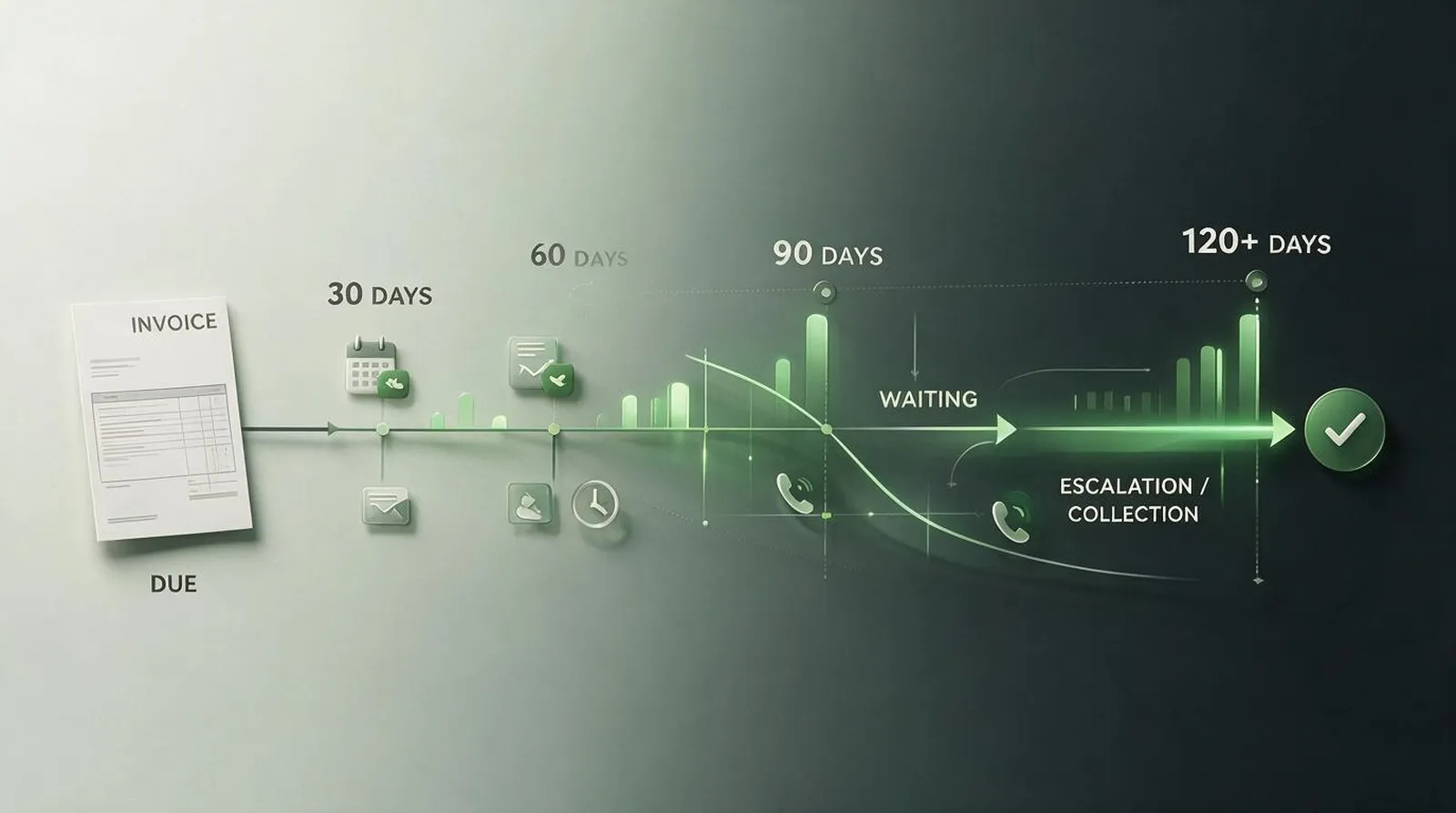
For many business-to-business invoices, 60 to 90 days past due is a practical window for outside collection, but it is not a legal waiting period. Refer sooner when the customer stops responding, breaks a payment promise, appears financially distressed, disputes the invoice without support, or owes an amount material to your cash flow. Before referral, confirm the debtor’s legal identity, reconcile the balance, answer documented disputes, complete any contractual notice or cure requirements, and check for bankruptcy and filing deadlines. Consumer-purpose debts require a different compliance analysis, even when a business name or guarantor is involved. The next step is to score the account by age, responsiveness, documentation, dispute status, and collectability. If another internal reminder is unlikely to change the result, send a final demand with a firm date and prepare a complete referral file.
What is the short answer on when to send an invoice to collections
A business should usually consider outside collection when an invoice is clearly due, ordinary follow-up has failed, and the account is supported by documents. For many companies, that decision falls between 60 and 90 days past due. The range is a management benchmark, not a federal rule. Payment terms, customer history, the size of the balance, the strength of the file, and signs of financial trouble may justify a different date.
The useful question is not whether the invoice has crossed an arbitrary age. Ask whether more internal effort is likely to produce payment. A reliable customer who reports a routing error and provides a scheduled pay date may deserve a short extension. A customer who misses two promises, avoids calls, or closes a location may need referral at 30 or 45 days. Waiting should be an active decision supported by new information, not the default result of an overloaded accounts-receivable queue.
A past-due receivable is an invoice that remains unpaid after its contractual due date. Age the account from that date, document each contact, and assign a clear owner for the next action.
Is there a legal waiting period before commercial collections
There is no universal federal waiting period that requires a creditor to hold a commercial invoice for 30, 60, or 90 days before sending it to collections. The contract may control when payment is due and whether the creditor must give notice or an opportunity to cure before using a particular remedy. State statutes, licensing rules, court procedures, arbitration provisions, lien rules, and industry-specific requirements can also affect the process.
Federal consumer collection law draws a different boundary. The Fair Debt Collection Practices Act defines covered debt by the primarily personal, family, or household purpose of the transaction. The CFPB and FTC explain that the FDCPA generally does not cover business debts. [1] [2] [3] Commercial collection is therefore not unregulated. State collection and unfair-practices laws may reach conduct outside the FDCPA, and the governing contract and forum still matter. Classify the obligation by its actual purpose rather than assuming that an individual signer, sole proprietor, or personal guaranty automatically makes it consumer or commercial.
For a fuller treatment of that classification, read Commercial Collections vs. Consumer Collections before referring any mixed-use or uncertain account.
What should happen during the first 90 days past due
A disciplined sequence gives the customer reasonable opportunities to fix an administrative problem without allowing the file to drift. Adjust the cadence to the contract, relationship, invoice size, and risk signals. Every contact should identify the invoice, balance, due date, and requested response.
Account age | Recommended action | Escalation test |
|---|---|---|
Due date to 15 days | Confirm receipt, resend the invoice, and identify any approval or vendor-setup problem | Is there a specific cause and a credible payment date |
16 to 30 days | Contact accounts payable and the business sponsor; resolve missing documents or credits | Has the customer acknowledged the balance and committed to a date |
31 to 45 days | Move from reminders to a documented escalation and manager-level contact | Has a promise been missed or communication slowed |
46 to 60 days | Send a final demand or formal notice that follows the contract | Would another internal contact add information or merely repeat the request |
61 to 90 days | Complete the referral file and select an agency, attorney, or negotiated plan | Is the claim supported and is the debtor still collectible |
More than 90 days | Escalate promptly unless a signed, performing plan explains the delay | Are delay, limitation, insolvency, or evidence risks increasing |
This cadence should not restart every time the customer says payment is coming. Record the promised amount and date. If the promise fails, move to the next stage unless new evidence supports a brief extension. A final demand should contain a specific response date and a truthful description of the next authorized step. Toro Recovery’s collection letter generator can provide a structured starting point for that notice.
Which warning signs justify an earlier referral
Account age is only one measure of risk. Refer earlier when behavior or external facts suggest that the chance of voluntary payment is falling. The objective is to preserve options while contact information, records, assets, and responsible employees are still available.
Warning sign | What it may indicate | Recommended response |
|---|---|---|
Broken payment promise | The customer cannot or will not honor a stated date | Ask once for a documented explanation; escalate if no credible cure follows |
Sudden silence | Financial stress, avoidance, staff loss, or a disputed approval | Confirm contacts and legal entity, then shorten the timeline |
Repeated requests for the same documents | Delay or a process failure without ownership | Send one complete package and require a named decision maker |
Closure, layoffs, returned mail, or vendor complaints | Collectability may be deteriorating | Verify facts and seek an immediate professional review |
Unsupported dispute raised late | A defense may be emerging after routine reminders failed | Request specifics, preserve evidence, and refer if the response remains conclusory |
Large or concentrated exposure | One default could materially affect liquidity | Use a lower age threshold and management approval for extensions |
A bankruptcy report requires a different response. A petition generally creates an automatic stay against efforts to collect a prepetition claim, subject to statutory exceptions. [4] Stop ordinary collection, verify the case, and obtain bankruptcy guidance. Do not send a routine demand or instruct an agency to continue merely because the invoice is valid.
What should you verify before referring the account
A fast referral is useful only when the file is accurate. Confirm the exact debtor entity, billing and notice addresses, invoice numbers, due dates, principal, credits, payments, and any supported interest or fees. Match the invoice to the signed contract, credit application, purchase order, delivery record, time sheet, completion certificate, acceptance email, or other proof of performance.
Review the file for the issues most likely to slow recovery:
The contract’s notice, cure, governing-law, venue, arbitration, fee, interest, and guaranty provisions.
Every substantive dispute, credit request, return, service complaint, setoff, or counterclaim and the business’s response.
The customer’s legal name, current location, responsible contacts, related entities, and the identity and scope of any guarantor.
A complete account ledger and chronology of reminders, acknowledgments, promises, extensions, and missed dates.
Possible bankruptcy, dissolution, litigation, asset transfer, or approaching limitation period that requires specialized review.
Do not add collection costs, attorney fees, interest, or late charges simply because an invoice is old. The agreement and applicable law must support each amount. Give the collection partner the original balance and an itemized calculation. If the file contains inconsistent invoices or undocumented credits, reconcile them before demanding a total that the customer can easily challenge.
How should disputes and payment promises change the timing
A documented dispute deserves investigation, not an automatic delay. Ask the customer to identify the disputed line item, contractual basis, and supporting documents. Then involve the operational employee who can confirm delivery or performance. Correct a real error promptly. If the dispute lacks support, answer it in writing and keep the original escalation date or set a short final deadline.
A payment plan can justify holding an account internally when it is written, affordable, approved by an authorized person, and performing. State the installment amounts, dates, payment method, treatment of interest and fees, and result of default. A vague promise to “pay soon” is not a plan. Once a promised date passes, ask for facts rather than another assurance. Multiple missed promises usually favor referral.
Partial payment can show cooperation, but it can also mask deterioration. Apply it according to the agreement and accounting records, confirm the remaining balance, and avoid statements about tolling or revival without legal review. Limitation periods vary by claim and jurisdiction. The model UCC rule for contracts for the sale of goods generally uses four years after accrual and permits a limited contractual reduction, but each state’s enacted law and other claim types may differ. [5] Do not assume that a reminder, demand, acknowledgment, or partial payment extends the time to sue.
What does waiting too long cost
Delay can turn a manageable receivable into a weaker claim. Employees who handled the transaction leave, emails become harder to retrieve, delivery records are archived, and the debtor’s attention shifts to newer vendors. If financial distress grows, cash and reachable assets may shrink while more creditors compete for payment. A missed filing or contractual notice deadline can damage an otherwise valid claim.
Aging also affects internal decisions. The longer a large receivable remains unresolved, the less reliable cash forecasts and credit limits become. Measure the effect through days sales outstanding, aging buckets, broken-promise rates, dispute cycle time, and the share of balances referred after policy deadlines. Toro Recovery’s DSO reduction calculator can help estimate the cash-flow effect of reducing collection time.
Earlier referral is not always better. Escalating a recently due invoice before confirming receipt can waste fees and damage a good relationship. The goal is a policy with defined checkpoints and exceptions, supported by facts in the account record.
Which collection path fits the account
Once internal outreach has reached its limit, choose the path that fits the claim rather than sending every balance through the same channel. Consider documentation, dispute complexity, debtor location, account size, contractual forum, limitation risk, and likely collectability.
Path | Best fit | Key question |
|---|---|---|
Keep internal | Short administrative delay, responsive customer, or current written plan | Is there new evidence that payment will arrive on a defined date |
Commercial collection agency | Supported B2B balance, failed internal outreach, and a reachable operating debtor | Can professional contact improve recovery without immediate suit |
Attorney review | Large, disputed, secured, multi-state, urgent, or time-sensitive claim | Does the file require legal analysis or a specific remedy |
Settlement or revised plan | Verified hardship with a credible source of repayment | Does the expected recovery justify the concession and delay |
Write-off with monitoring | Low economic value or poor present collectability | Is further spend proportionate, and should the account be monitored lawfully |
For an overview of the outside-recovery process, documentation, and escalation choices, use Toro Recovery’s B2B Debt Collection guide as the supporting hub for this decision.
How do common invoice scenarios change the answer
A reliable customer reports an approval delay
A $6,000 invoice is 18 days past due. The customer confirms receipt, identifies the approver who was out of office, and gives the next payment-run date. Verify that date and follow up immediately if it is missed. Outside collection is premature because the customer supplied a specific, plausible route to payment.
A customer breaks two promises
A $28,000 invoice is 42 days past due. Accounts payable promised payment twice, the business sponsor no longer responds, and no dispute has been stated. Send the contract-compliant final demand, set a firm date, and assemble the referral package now. Waiting for a third promise adds little information.
A customer disputes part of the work
A $50,000 invoice is 67 days past due, and the customer documents a $7,500 service issue. Investigate the disputed portion, request payment of any clearly undisputed amount, and preserve the project records. Depending on the contract and evidence, negotiation, agency placement, or counsel may be appropriate. Treating the entire balance as undisputed could slow resolution.
What should the referral package contain
Send a concise account summary with the debtor’s legal name, addresses, contacts, balance, invoice dates, last payment, last meaningful contact, and recommended next step. Attach the governing agreement, credit application, purchase order, invoices, statement, proof of delivery or performance, correspondence, dispute materials, final demand, and delivery evidence. Include guaranty documents and known bankruptcy or litigation information.
Flag the limitation date if known, but do not present an internal estimate as legal advice. Identify any deadline that needs counsel’s confirmation. Keep privileged attorney communications separate unless counsel approves disclosure. A complete handoff reduces duplicate requests and allows the collection professional to evaluate liability, collectability, and the appropriate tone from the first contact.
Frequently asked questions
Can an invoice go to collections after 30 days
Yes, if the invoice is due and the contract and applicable law permit referral. Thirty days may be reasonable after a broken promise, customer shutdown, or other serious risk. For a normally reliable customer with a confirmed administrative delay, a short internal extension may be more productive.
Should every invoice be sent at 90 days
No. A 90-day rule is easy to administer but can be too slow for a deteriorating account and too rigid for a performing written plan. Use policy checkpoints plus documented exceptions.
Do I need to send a final demand first
Often it is prudent, and a contract, statute, or court procedure may require a demand or opportunity to cure. Requirements vary. California small-claims guidance, for example, requires a claimant to ask the other side for the money before filing; that is a state and forum example, not a national collections rule. [6]
What if the customer is still communicating
Communication matters only when it produces useful facts, payment, or a credible plan. Repeated nonspecific assurances should not keep the account internal indefinitely.
Can I refer a disputed invoice
Yes, but disclose the dispute and provide the supporting record. Resolve obvious errors first. A complex defense, counterclaim, or contractual interpretation issue may call for attorney review rather than ordinary agency placement.
Does sending an account to collections guarantee a lawsuit
No. Commercial collection can involve demands, negotiation, investigation, payment arrangements, settlement, and legal review. Litigation should be evaluated separately based on evidence, contract terms, jurisdiction, cost, and collectability.
What if the debtor says it filed bankruptcy
Stop ordinary collection, verify the filing, and seek bankruptcy guidance. The automatic stay may apply even though the business still owes the invoice.
What should you do next
Review the oldest and largest balances first. For each account, confirm the due date, documentation, response history, dispute status, promised payments, contract requirements, bankruptcy status, and filing risk. Set one dated next action. Send a final demand when the file is ready, and refer the account when another internal reminder is unlikely to improve the outcome.
If a supported commercial invoice has reached that point, request a recovery review from Toro Recovery. Provide the account summary and core documents so the next step can be evaluated promptly. This article provides general information, not legal advice. Laws, contracts, claim types, and court procedures vary, and qualified counsel should review legal rights, deadlines, remedies, and disputed liability.
Sources and references
[1] 15 U.S.C. § 1692a. Federal definitions, including the personal, family, or household purpose test.
[2] Consumer Financial Protection Bureau, What Laws Limit What Debt Collectors Can Say or Do. CFPB explanation of FDCPA scope and the state-law overlay.
[3] Federal Trade Commission, Debt Collection FAQs. FTC guidance stating that business debts are not covered by the FDCPA.
[4] 11 U.S.C. § 362. Federal bankruptcy automatic-stay provisions.
[5] Uniform Commercial Code § 2-725. Model limitations rule for sale-of-goods contracts; enacted state law may vary.
[6] California Courts, Ask for the Money. Example of a court system requiring a pre-filing request for payment in small claims.