
TORO Recovery Blog
What Documents Do You Need to Collect an Unpaid Business Debt?
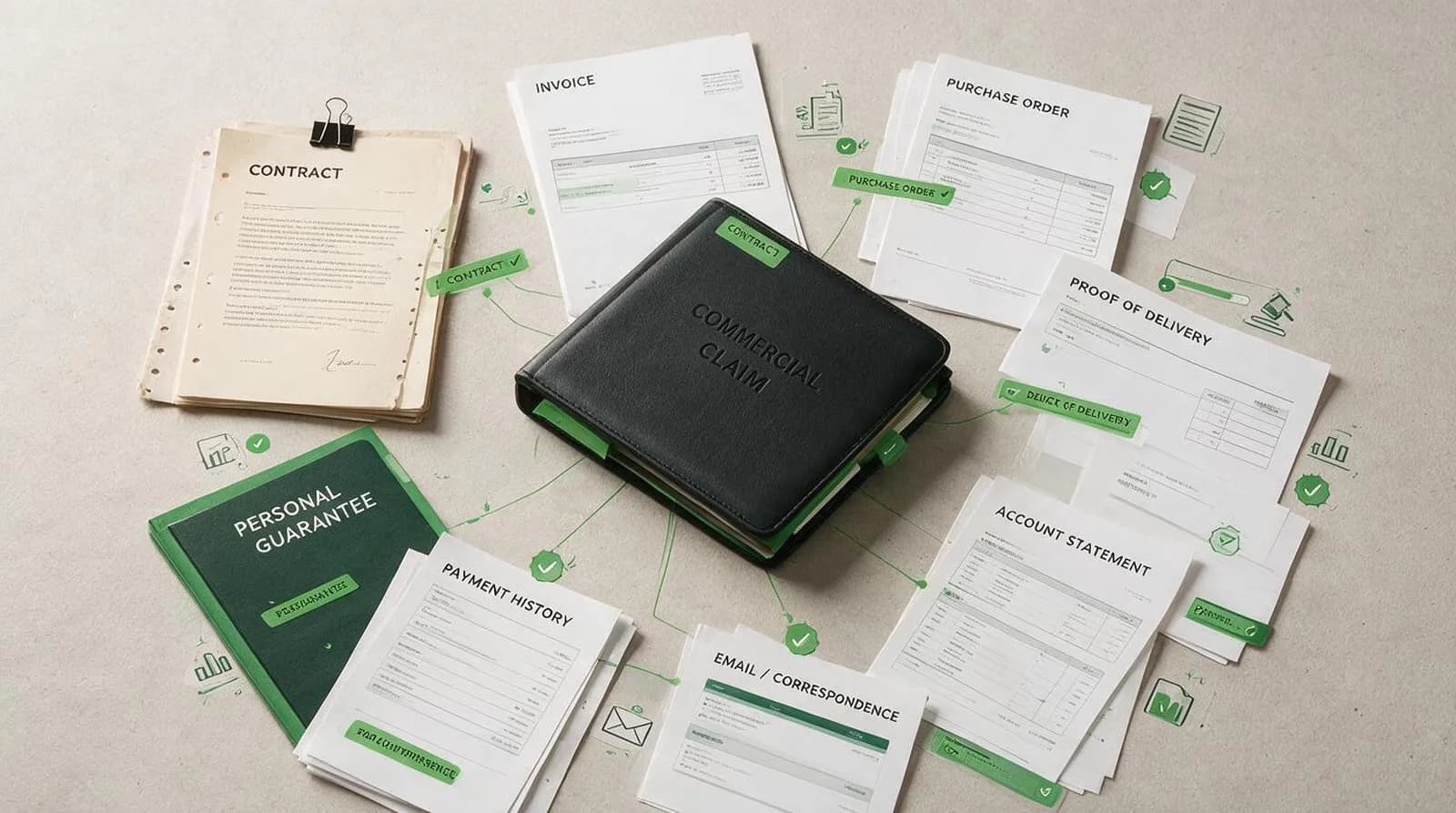
Find which contracts, invoices, delivery records, account histories, and communications can help you document and collect your unpaid business debts.
To collect an unpaid business debt, assemble documents that prove five facts: who owes the money, why the obligation exists, what you delivered, how the balance was calculated, and what happened after payment became due. The strongest file usually includes the signed contract or accepted terms, purchase order, invoices, itemized account statement, delivery or performance records, change orders, payment history, and communications acknowledging the debt or explaining a dispute. Keep native electronic files and a dated contact log, not only screenshots. Requirements vary by contract, industry, state law, dispute status, and collection method; an invoice alone may be insufficient. Next, reconcile the balance, fill any evidence gaps, and organize one chronological claim package before sending a final demand, referring the account to a commercial collection agency, or asking counsel to evaluate suit.
What documents are needed to collect a business debt
A collection file should allow an unfamiliar reviewer to understand the claim without reconstructing the account from several systems. The reviewer may be a customer executive, collection specialist, attorney, mediator, judge, or bankruptcy trustee. Each document should support a specific element of the claim and agree with the others on the debtor’s name, amount, dates, and transaction.
The Toro Recovery B2B debt collection guide explains the broader recovery process. For claim preparation, use the following evidence groups.
Evidence group | Typical documents | What it establishes |
|---|---|---|
Identity and authority | Credit application, W-9, formation record, guaranty, signer details | Correct debtor, legal name, address, and authorized parties |
Agreement | Contract, proposal, terms, purchase order, amendments | Offer, acceptance, price, payment terms, remedies, and governing provisions |
Performance | Delivery receipt, time sheet, work order, acceptance, project records | Goods delivered or services performed |
Amount | Invoices, statement, ledger, credits, payments, fee calculation | Principal balance and each adjustment |
Post-default history | Emails, call notes, promises, dispute responses, demand delivery | Notice, admissions, defenses, and collection chronology |
Which agreement records prove the customer agreed to pay
Start with the document that created the obligation. Depending on the transaction, that may be a master services agreement, signed proposal, credit application, accepted quote, subscription order, lease, purchase order, or online terms accepted through an account. Include schedules and exhibits that state price, scope, billing triggers, due dates, interest, late fees, dispute procedures, notice addresses, collection costs, venue, and governing law.
Add every amendment, renewal, change order, scope approval, and relevant version of incorporated terms. A purchase order that references a vendor quote should be paired with the quote. If acceptance occurred electronically, preserve the audit record showing the user, account, date, time, and version accepted. If someone signed for a trade name, identify the legal entity behind that name. Keep a personal guaranty separate and verify that it was actually executed; do not assume an owner owes a corporate debt.
When no signed contract exists, gather the accepted estimate, ordering emails, prior invoices paid under the same terms, portal approvals, and messages confirming price or scope. These records may help establish an agreement, but enforceability depends on the facts and applicable law.
Which invoice and accounting records prove the amount due
Provide every unpaid invoice, not a spreadsheet total alone. Each invoice should show the creditor, debtor, invoice number, invoice date, due date, description, quantity or period, tax, credits, and payment instructions. Confirm that the invoice matches the contract, purchase order, and customer entity. Correct duplicate billing, unapplied cash, tax errors, and credit memos before escalation.
Add an itemized statement of account and a transaction-level ledger from the accounting system. The ledger should start before the disputed period and show invoices, payments, credits, write-offs, returns, and adjustments. If you claim interest, late charges, attorney fees, or collection costs, provide the contractual or legal basis and a transparent calculation through a stated date. Separate principal from added charges.
IRS Publication 583 explains that business records should support receipts and expenses and describes source documents such as invoices, receipts, deposit information, and canceled checks. Tax recordkeeping rules do not prove that a debt is collectible, but disciplined source records make a balance easier to verify. [1]
What proves that goods or services were delivered
Performance evidence connects the agreement to the invoice. For goods, collect bills of lading, signed delivery receipts, carrier tracking, serial numbers, receiving reports, inspection records, and return authorizations. For services, use signed time sheets, work orders, service tickets, milestone approvals, meeting records, project files, completion certificates, and customer acceptance emails. Construction and project claims may also require change orders, daily logs, photographs, lien notices, or waiver records.
A proof of delivery is most useful when it identifies the recipient, date, shipment or service, and related order. Match each performance record to an invoice line or billing milestone. A folder of delivery slips that cannot be tied to the claimed balance creates avoidable uncertainty.
If the customer alleges defective work or nonconforming goods, preserve the complaint, your investigation, proposed cure, replacement or repair records, inspection results, and the customer’s response. Do not omit an unfavorable message. A complete file helps a reviewer assess both the claim and the defense.
Which communications and collection records matter
Save communications that acknowledge the invoice, confirm performance, promise payment, request more time, dispute a charge, approve a change, or identify the correct debtor. Preserve complete email threads with attachments and dates. Add call notes identifying the participants, time, substance, commitments, and next action. A note such as “called customer” has little value; “controller confirmed Invoice 1842 and promised ACH by October 4” records a meaningful event.
Keep copies of reminders, account statements, final demands, and evidence of delivery. Document bounced email, returned mail, disconnected numbers, and address research. If a settlement or payment plan was offered, include the proposal, acceptance, installments received, and default. Mark attorney communications appropriately and avoid forwarding privileged advice outside the people who need it.
Before referral, use How to Write a Demand Letter for an Unpaid Business Invoice to confirm that the demand states the amount, basis, deadline, payment instructions, and an accurate next step.
How should electronic records and screenshots be preserved
Keep the native file or system export whenever possible. A screenshot may omit metadata, attachments, audit history, or the URL and time needed to explain it. Export full emails, portal histories, electronic-signature certificates, CRM notes, accounting detail, and shared-file versions. Retain an unchanged copy and document later redaction or conversion.
NIST’s Digital Evidence Preservation guidance addresses storage, access controls, authentication, and format considerations. A commercial creditor usually does not need a forensic laboratory process, but the core lesson applies: preserve original information, control access, and record what was collected and changed. [2]
Use consistent file names and a read-only archive. Do not alter dates, recreate missing approvals, edit an email chain to remove context, or paste information from different systems into a document that looks original. If sensitive data is unnecessary for collection, restrict or redact it while keeping the original secure.
What should a collection claim package contain
Create one indexed package plus a folder of native records. Start with a one-page account summary naming the creditor, exact legal debtor, contact information, balance by invoice, oldest due date, last payment, dispute status, and requested action. Follow with the agreement, invoices and ledger, performance proof, key communications, demand and delivery evidence, and any relevant corporate or bankruptcy information.
A reconciliation showing principal, payments, credits, and separately stated charges
A chronology of order, performance, invoicing, due date, contacts, promises, and default
A dispute summary stating each customer objection and the record that answers it
Known debtor identifiers and locations, without unnecessary personal or confidential data
The creditor contact who can explain the transaction and authenticate company records
Use the business debt recovery calculator to estimate the economic impact of timing and recovery assumptions, then decide whether agency placement, counsel review, settlement, or continued internal work is proportionate to the claim.
How do you organize documents for a disputed invoice
A dispute should change the file from a general collection packet into an issue-by-issue claim record. State the customer’s position fairly, identify the controlling term, and attach the best supporting record. Separate a genuine performance dispute from an administrative excuse or inability to pay. If the evidence shows a valid credit is due, correct the balance before pursuing the remainder.
Customer position | Records to review | Preparation action |
|---|---|---|
We never ordered it | Contract, purchase order, approval email, portal audit | Identify who ordered, their authority, and the accepted terms |
It was not delivered | Carrier record, receipt, service ticket, acceptance | Match delivery or performance to invoice lines |
The price is wrong | Quote, rate schedule, change order, prior billing | Reconcile quantity, rate, tax, and approved changes |
We already paid | Bank record, remittance, ledger, unapplied cash | Trace the payment and correct any posting error |
The work was defective | Complaint, specifications, cure records, inspection | Document the issue, response, and remaining amount |
What if important documents are missing
Do not manufacture a replacement or describe an unsigned document as signed. Search the accounting platform, email archive, CRM, contract repository, e-signature account, customer portal, shipping system, shared drives, and former account owner’s files. Ask operations and sales for records before contacting the customer solely to fill a gap. A neutral request for a purchase-order copy or remittance detail may resolve the issue without weakening the claim.
Build a gap list showing the missing record, why it matters, likely custodian, search performed, and available substitute. Bank deposits may support payment history, while prior paid invoices may explain the parties’ course of dealing. Whether substitutes are sufficient is a legal and factual question. Seek counsel for a large, contested, or time-sensitive claim.
How do documents affect agency placement or legal action
A commercial collection agency can begin more efficiently when the balance is reconciled and the evidence answers predictable objections. A thin file may cause delays, repeated requests, or a weaker settlement position. Decide when to escalate using the account’s age, value, dispute, responsiveness, and documentation rather than waiting indefinitely for a perfect packet.
The article How Long Should You Wait Before Sending an Unpaid Invoice to Collections explains those timing factors. Send available records promptly and identify gaps instead of leaving the reviewer to discover them.
If litigation becomes an option, evidentiary rules may affect how records are authenticated and admitted. The Federal Rules of Evidence include provisions on authentication, business records, originals, and duplicates; state courts have their own rules. An attorney can determine what applies to the forum and claim. [3]
Bankruptcy creates another documentation test. The current U.S. Courts Official Form 410 and its instructions address proof-of-claim information and supporting documents. Filing deadlines, redaction rules, and the effect of a proof of claim require case-specific attention. [4]
What does a well prepared claim look like in practice
Assume a staffing company seeks $42,000 on three invoices. The customer says two time sheets lacked approval and one invoice used the wrong rate. A weak referral includes the invoices and a balance screenshot. A prepared referral includes the signed services agreement, rate exhibit, purchase order, weekly time sheets, supervisor approvals, payroll records, invoice detail, payment history, and the full email thread about the rate.
The creditor then creates a reconciliation. It corrects one genuine rate error, applies an overlooked payment, and reduces the claim to $36,800. The claim summary explains why the remaining time sheets meet the contract’s approval process and identifies the customer manager who accepted the work. That package is more credible because it removes unsupported amounts and makes the remaining claim easy to test.
What should you check before submitting the debt
The legal names, addresses, account number, and signer information are consistent.
Every claimed invoice matches the agreement, order, and performance records.
Payments, credits, returns, taxes, interest, and fees have been reconciled.
The file includes the customer’s latest dispute and your documented response.
Native electronic records and an unchanged archive are available.
The summary states the oldest due date, limitation concerns, bankruptcy status, and next deadline.
Sensitive data has been limited to what the agency or attorney needs.
Once the file passes this review, transmit it through a secure channel and keep a copy of exactly what was sent. Assign one knowledgeable contact to answer questions. Continue preserving new communications, returned mail, payments, and dispute developments after placement.
Frequently asked questions
Is an invoice enough to collect a business debt
An undisputed invoice may support voluntary payment, but it does not always prove agreement, performance, or the balance. Pair it with the contract or order, delivery evidence, ledger, and relevant communications.
Do you need a signed contract
A signed contract is strong evidence, but obligations may arise from accepted orders, emails, electronic terms, oral agreements, or conduct. Applicable law and contract formalities matter. Seek legal advice when enforceability is uncertain.
Should you send original documents to a collection agency
Send secure copies or exports and retain originals or native files under your record policy. Ask what format is required. Never mail an irreplaceable original unless counsel or a formal process requires it.
Are screenshots acceptable evidence
Screenshots can help, but may omit context and metadata. Preserve the underlying email, export, audit trail, or native file, plus information explaining who created or retrieved it and when.
What documents support late fees or interest
Provide the contract term and legal basis, plus a calculation showing the rate, principal, dates, payments, and credits. Do not add a fee merely because an invoice template mentions one.
How long should collection documents be retained
There is no single retention period. Limitation periods, tax rules, industry requirements, litigation holds, privacy duties, and company policy may differ. Suspend routine deletion when a dispute, claim, audit, subpoena, or bankruptcy makes records relevant.
Can Toro Recovery review an incomplete claim
A preliminary review can identify missing information and next steps. Label known gaps and provide available records. Do not delay legal advice when a filing deadline, bankruptcy, lien right, or large contested balance may be involved.
How should a business move from records to recovery
Start with a defensible balance, not the largest number in the aging report. Organize the agreement, performance evidence, accounting detail, and communications into a chronological package. Resolve obvious errors, document genuine disputes, preserve electronic records, and assign a decision date. The goal is a file that lets another person verify the claim quickly and choose the next proportionate step.
For accounts that are ready for a documented final notice, Toro Recovery’s collection letter generator can help structure the communication. For agency placement or legal review, submit the same underlying claim package rather than a new summary that omits the evidence.
This article provides general business information, not legal advice. Contract rights, evidence rules, limitation periods, licensing, bankruptcy, liens, privacy, and collection communications can vary by jurisdiction and circumstance.
Sources and references
1. Internal Revenue Service, Publication 583, Starting a Business and Keeping Records
2. National Institute of Standards and Technology, Digital Evidence Preservation, NIST IR 8387
3. Administrative Office of the U.S. Courts, Federal Rules of Evidence
4. Administrative Office of the U.S. Courts, Official Form 410, Proof of Claim