
TORO Recovery Blog
Customer Ghosting You Over an Unpaid Invoice? Here's What to Do.
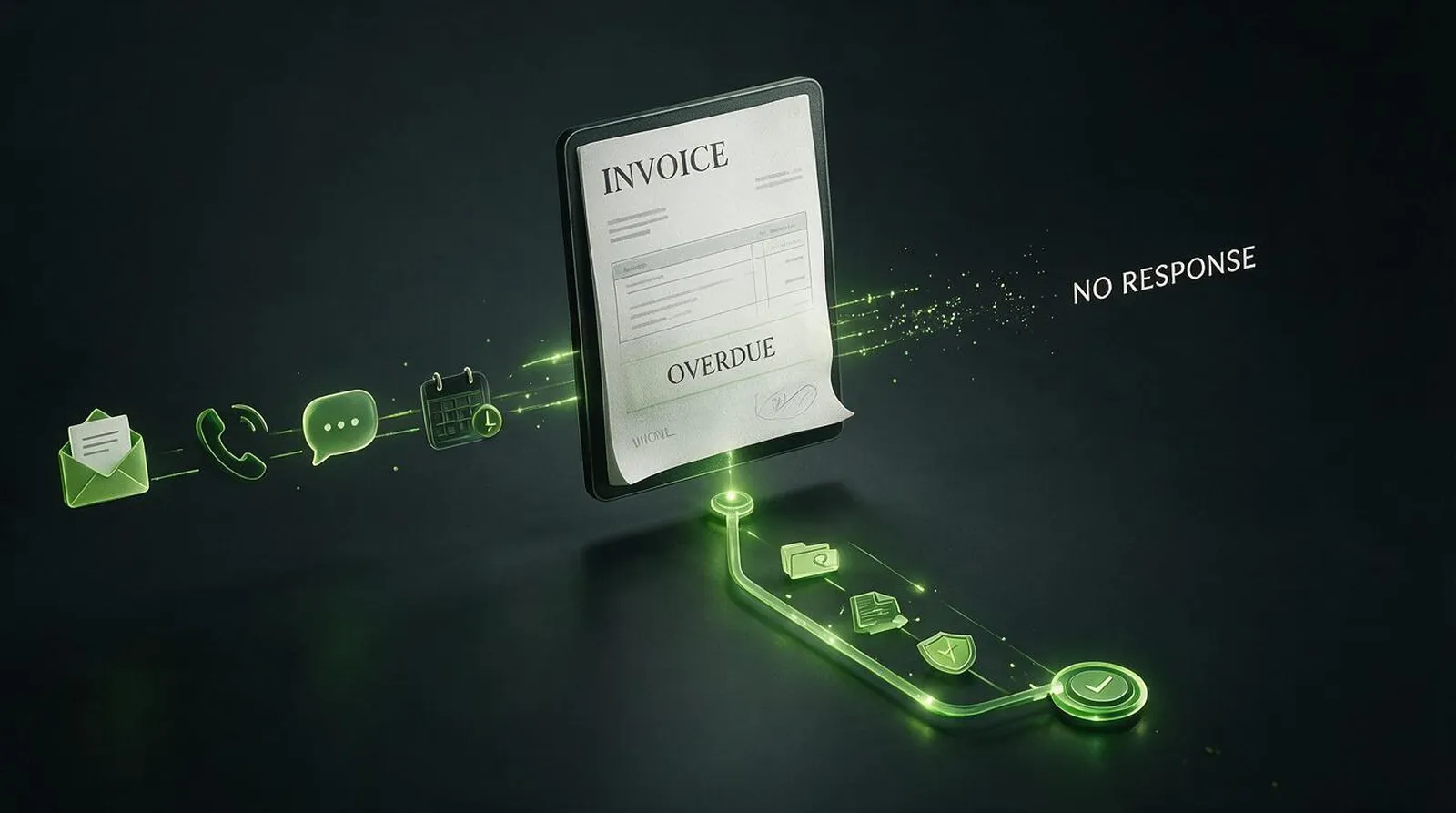
Customer ignoring an unpaid invoice? Use a clear escalation process to verify delivery, document the debt, set deadlines, and protect recovery rights.
If a customer is ignoring an unpaid invoice, first verify that the invoice is accurate, delivered, and addressed to the person who can approve payment. Then send one concise follow-up stating the invoice number, balance, due date, payment instructions, supporting documents, a clear way to raise a dispute, and a firm response deadline. Call an established contact, copy an appropriate manager, document every attempt, and pause additional credit or work when your contract and policy allow. Silence does not prove refusal, fraud, or insolvency, so check the customer's legal status and confirm payment-channel changes independently. If the deadline passes without a specific dispute or credible payment commitment, send a formal demand and evaluate commercial collection or attorney escalation before records, assets, or legal deadlines deteriorate.
What should you do first when a customer ignores an invoice
Start by removing preventable reasons for nonpayment. Confirm the legal customer name, billing address, invoice number, purchase order, amount, tax, credits, due date, payment method, and delivery or acceptance evidence. Check whether the invoice entered the customer's portal, whether a vendor form or W-9 is missing, and whether the account was placed on hold by procurement or accounts payable.
Next, contact a known person through a channel already associated with the relationship. Ask a closed, answerable question: 'Is invoice 10482 approved for payment on September 18, or is there a specific issue we need to resolve?' A specific question is harder to ignore than another copy of the invoice with 'following up' in the subject line.
Toro Recovery's collection letter generator can help create a consistent written follow-up. Review every factual statement, amount, deadline, and remedy before sending it.
Why might a customer suddenly stop responding
Possible cause | What to verify | Best next response |
|---|---|---|
Administrative delay | Portal status, approval owner, PO, vendor setup, invoice address | Supply the missing item and obtain a dated payment commitment |
Genuine dispute | Product, service, quantity, price, delivery, credits, or contract terms | Define disputed and undisputed amounts; assign a resolution owner |
Cash-flow pressure | Broken promises, partial-payment request, other warning signs | Request a short written plan supported by realistic dates |
Contact turnover | Employment status, forwarding message, AP and management contacts | Route the invoice to a verified replacement contact |
Business distress or closure | Entity status, premises, lawsuits, bankruptcy, public filings | Protect exposure and consider expedited professional review |
Fraud or compromised email | Domain, reply address, bank instructions, unusual urgency | Verify through a known number; do not rely on the suspect message |
Avoidance | Accurate delivery, repeated silence, no specific objection | Send a final deadline and move to the chosen escalation path |
Do not diagnose the cause from silence alone. The same behavior can reflect a missing approver, a disputed delivery, financial distress, or deliberate avoidance. Your job is to convert uncertainty into documented facts without letting open-ended follow-up continue indefinitely.
What escalation timeline works when the customer stays silent
Timing after verification | Action | Objective |
|---|---|---|
Day 0 | Send a concise account summary and request a payment date or specific dispute | Create one clear decision point |
Day 2-3 | Call the established contact and accounts payable; leave a factual message | Confirm receipt and identify the decision owner |
Day 5-7 | Copy an appropriate manager or relationship owner and restate the deadline | Escalate visibility without public pressure |
Day 10-14 | Send a final internal notice or formal demand using a provable delivery method | State the consequence of continued nonresponse |
After deadline | Place the account, seek attorney review, or document a reasoned hold | Stop repetitive reminders and execute the decision |
This is a practical framework, not a legal deadline. Shorten it when the debtor is closing, moving assets, approaching bankruptcy, or nearing a contractual or statutory deadline. Extend it when a named approver is resolving a documented issue on a credible schedule. Your contract, industry, jurisdiction, relationship, and claim size should control.
For placement timing, see How Long Should You Wait Before Sending an Unpaid Invoice to Collections. The goal is a defined escalation calendar, not an arbitrary number of reminder emails.
What should the final invoice follow-up email say
Keep the message short enough to answer from a phone. Use a subject line containing the invoice number and due date. Attach or link the invoice and essential support. State the requested action as a choice: confirm the payment date, identify the dispute with supporting detail, or provide the correct decision-maker by a stated deadline. Avoid emotional language, accusations, and threats.
A useful final follow-up can read as follows. Replace the bracketed information and remove any statement that is not accurate for the account:
Subject: Action required - Invoice [number], [amount], due [date] Our records show invoice [number] for [amount] remains unpaid. The invoice, account statement, and [delivery or completion record] are attached. Please reply by [date] with (1) the scheduled payment date, (2) a specific dispute and the amount disputed, or (3) the correct person responsible for approval. Payment can be made through [verified method]. If we do not receive a response by the deadline, we will review the account for formal collection escalation under our agreement and policy.
If the customer proposes a payment date, restate it in writing and calendar the follow-up. If it proposes installments, obtain dates and amounts rather than accepting 'soon.' A promise is an operational milestone, not collected cash.
Toro Recovery's definition of a promise to pay explains the record that should accompany a payment commitment.
Who else should you contact at the customer
Escalate within the organization, not to unrelated people. Appropriate contacts can include accounts payable, the original buyer, project manager, department head, controller, CFO, owner, or registered office. Preserve the business relationship by explaining that you are trying to identify the payment owner or a specific issue, not embarrass the customer.
Should you send the invoice or demand by certified mail
A provable delivery method can be useful when email is unanswered, the contract requires notice, or the next step may depend on showing that a notice was sent. USPS states that Certified Mail provides a mailing receipt and, on request, electronic verification of delivery or attempted delivery; a return receipt can provide a delivery record. [1] Certified Mail does not prove that every factual or legal statement in the letter is correct, and the governing agreement or law may require a different address or method.
How can you check whether the customer is still operating
Search the relevant state business registry for legal name, status, registered agent, and filing history. The U.S. Small Business Administration links to state registration offices. [2]
Check the customer's official website, known telephone numbers, physical location, and established contacts; record what was verified and when.
For public companies and other SEC filers, search EDGAR for current reports, address changes, material events, and bankruptcy-related filings. [3]
Use PACER to search federal district and bankruptcy case information; the national Case Locator can identify the court when it is unknown. [4]
Check relevant state and local court, lien, judgment, licensing, and property records where lawful and proportionate.
A registry marked inactive does not automatically establish that the debt is uncollectible, and an active registration does not prove solvency. Match the exact entity, alternate names, addresses, and identifiers. Treat search results as leads to verify, not as permission to make public accusations or demand payment from a different entity.
What fraud warning signs require a different response
Stop and verify if a previously responsive customer suddenly insists on email-only communication, uses a slightly changed domain, requests new bank instructions, claims payment was sent to an unfamiliar account, or attaches unexpected files. The FBI advises businesses to examine addresses closely and verify changes in account numbers or payment procedures through a known person and an independently obtained channel. [5]
If funds may have been diverted, contact the financial institution immediately and preserve message headers, payment confirmations, account details, call notes, and system logs. Escalate internally to finance, security, legal, and insurance contacts as appropriate. A cybersecurity incident should not be treated as routine customer ghosting.
When should you stop new work or additional credit
Continuing to perform while old invoices remain unresolved can convert one exposure into several. Review the contract, credit policy, purchase commitments, notice requirements, service dependencies, and operational consequences before stopping work, withholding delivery, reducing a credit limit, or placing the customer on credit hold. Coordinate sales, operations, finance, and legal teams so one department does not promise new terms while another escalates.
How is ghosting different from an invoice dispute
Ghosting is nonresponse. A dispute is a stated objection to liability, performance, quantity, price, delivery, authorization, credits, or another part of the claim. Once the customer identifies a concrete issue, acknowledge it, separate disputed and undisputed amounts, request supporting detail, assign an owner, and set a resolution deadline. Repeating the same demand without addressing the stated issue rarely improves the file.
When should you send a formal demand letter
A formal demand is appropriate after the balance and debtor are verified, routine follow-up has failed, known disputes have been addressed, and the business is prepared to take the next stated step. The letter should identify the parties, contract or transaction, invoice, principal balance, credits, due date, prior requests, response deadline, payment method, and a contact for specific disputes.
Use How to Write a Demand Letter for an Unpaid Business Invoice to structure the notice. Do not threaten suit, fees, interest, liens, reporting, or other remedies unless the facts, agreement, applicable law, and actual intent support the statement.
Should you use a collection agency or an attorney
Account condition | Likely next path | Reason |
|---|---|---|
Documented debt; no specific dispute; operating debtor | Commercial collection agency | Structured outreach and negotiation may still produce voluntary payment |
Large or complex dispute | Attorney review | Contract interpretation, defenses, evidence, and litigation economics may control |
Urgent deadline or asset risk | Prompt attorney review | Delay may affect options, venue, remedies, or practical collectability |
Debtor requests a realistic short plan | Written monitored arrangement | Resolution may be proportionate if dates, amounts, and default terms are clear |
Bankruptcy identified | Bankruptcy counsel or claims process | The automatic stay and court deadlines may replace ordinary collection |
Weak documentation or wrong entity | Repair the claim before placement | Escalating an inaccurate file increases cost and dispute risk |
The B2B debt collection guide explains the full path from internal follow-up through third-party and legal collection.
If a bankruptcy filing is confirmed, stop treating the account as an ordinary collection matter. U.S. Courts guidance explains that filing generally creates an automatic stay that stops most collection actions. [6] Verify the debtor entity and case, preserve deadlines, and obtain qualified advice about proofs of claim, guarantors, collateral, setoff, and other issues.
What documents should you preserve before escalating
Signed contract, credit application, guaranty, purchase order, quote, and change orders
Invoices, statements, credits, payments, returns, and a reconciled account ledger
Proof of delivery, completion, acceptance, time records, and relevant project files
Emails, portal records, text messages, call notes, promises, disputes, and responses
Demand letters, attachments, mailing receipts, delivery records, and returned mail
Verified legal name, addresses, contacts, entity records, and public-record findings
Contractual notice, governing-law, venue, interest, attorney-fee, and limitation provisions
Toro Recovery's supporting documentation entry can help organize the claim file. Keep original records and a dated working copy rather than rebuilding the history after placement.
What does a practical ghosting scenario look like
A consulting firm completes a $24,000 project under a signed statement of work. The invoice is 52 days past due. The client contact stops answering, but the customer's website and office remain active. The consultant confirms that the invoice was sent to an outdated employee and never entered the current accounts-payable queue. It resubmits the invoice with the purchase order and completion email, obtains the controller's written approval, and receives a specific payment date.
Now change one fact: accounts payable confirms receipt but gives no issue, the buyer stops responding, two promised dates pass, and the state registry shows a recent address change. The consultant documents calls, sends a final notice to verified contacts and the contractual notice address, pauses additional credit under its policy, and sets a seven-day deadline. When no response arrives, it places the documented account with a commercial collection provider while separately checking for court or bankruptcy developments.
The lesson is not that every silent customer should be escalated immediately. It is that each follow-up should produce information or advance a defined decision. Once the process begins repeating without a specific dispute or credible commitment, continued waiting has a cost.
Which collection mistakes make ghosting worse
Sending repeated 'just checking in' emails without a balance, question, owner, or deadline
Using an unverified contact or accepting changed payment instructions by email alone
Copying unrelated employees, customers, family members, or public audiences
Threatening remedies, deadlines, fees, or legal action that are unsupported or not intended
Continuing new credit or work without an approved risk decision
Ignoring a specific dispute instead of separating and addressing it
Failing to reconcile the balance or preserve the complete communication record
Waiting through repeated broken promises while assets, evidence, and deadlines deteriorate
Frequently asked questions
How many times should I follow up on an unpaid invoice
Use a short documented sequence rather than an unlimited number. After verifying delivery, send a specific request, call, escalate internally at the customer, and issue a final deadline. If those steps produce no response, make the placement or legal-review decision.
What if the customer says it never received the invoice
Resend it to a verified address with the purchase order and essential support. Ask the recipient to confirm receipt, approval status, any missing requirement, and the scheduled payment date. Correct the process problem without waiving contractual rights unintentionally.
Can I charge a late fee when the customer ignores me
Only when the agreement and applicable law support it and required notices or calculations are satisfied. Keep principal, interest, late fees, credits, and collection costs separate. Obtain legal review if the right or amount is uncertain.
Should I keep calling a customer that will not respond
Calls should follow a defined cadence and business purpose. Record the date, number, person, message, and next step. Repetitive calls without new information are less useful than a clear written deadline and timely escalation.
Can I contact the business owner personally
You may contact an owner or executive as a business representative when appropriate, but the entity usually remains the obligor unless a valid personal guaranty or another legal basis creates individual liability. Do not state that the owner personally owes the debt without support.
How long should I wait after the final notice
Use the deadline stated in the notice and the underlying agreement. Seven to fourteen days may be practical for many ordinary commercial files, but urgent limitation, asset, shutdown, or bankruptcy risks can require faster professional review.
How can Toro Recovery help with an unresponsive customer
Toro Recovery can help assess the account, organize the documentation, identify missing information, and determine whether structured commercial collection or attorney escalation fits the claim. A productive review starts with the legal debtor name, balance, invoice age, contract, support, dispute status, prior contacts, promises, debtor location, and any deadline or distress signal.
This article provides general business information, not legal advice. Contract rights, notices, limitation periods, privacy duties, fees, interest, credit holds, collection communications, bankruptcy effects, and remedies vary by jurisdiction and facts.
Sources and references
1. United States Postal Service, Domestic Mail Manual, Certified Mail Services
2. U.S. Small Business Administration, State Registration Lookup
3. U.S. Securities and Exchange Commission, Search Filings and EDGAR
4. Administrative Office of the U.S. Courts, Find a Case Using PACER
5. Federal Bureau of Investigation, Business Email Compromise
6. Administrative Office of the U.S. Courts, Chapter 7 Bankruptcy Basics